


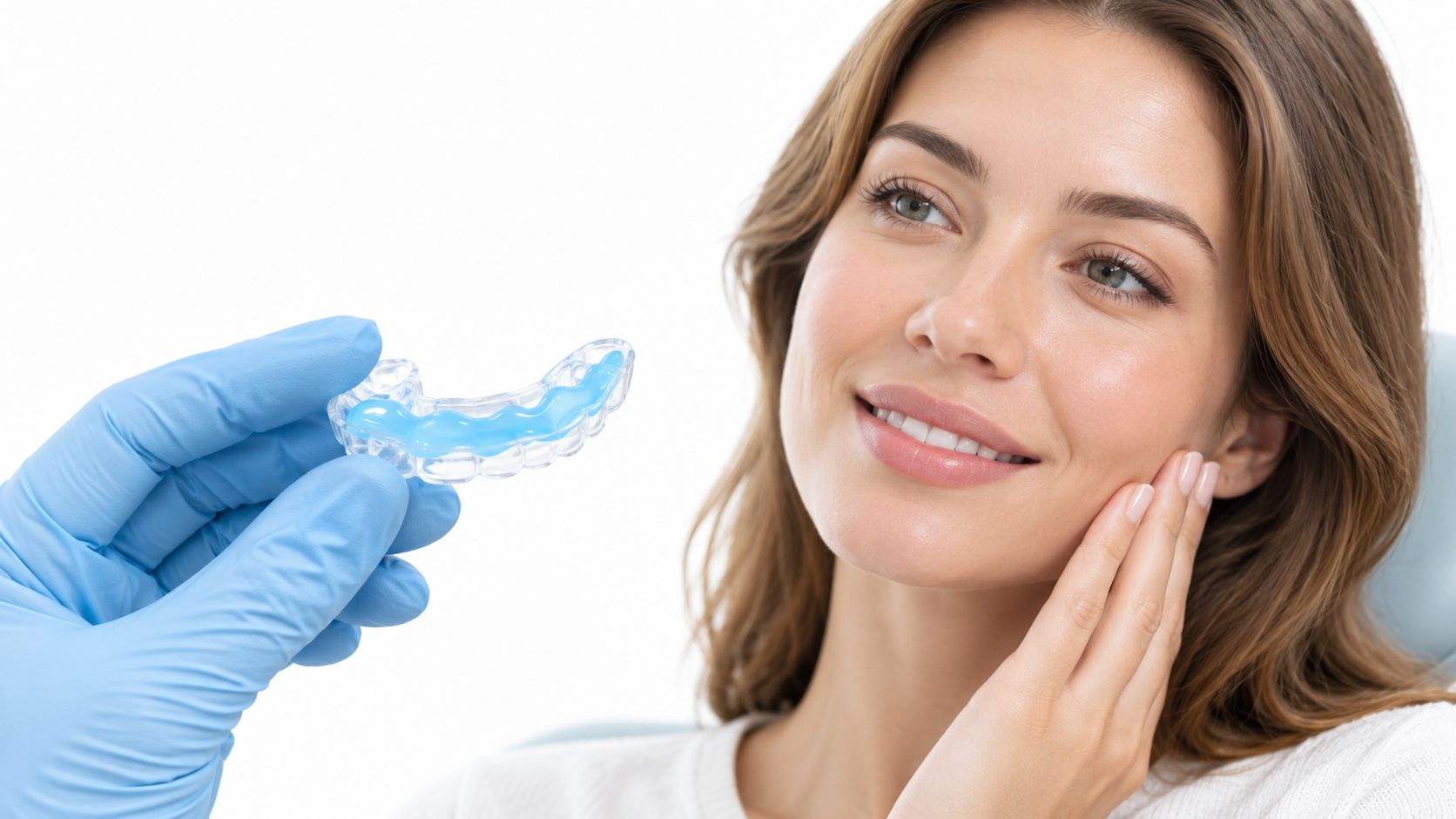
A brighter smile can sound appealing until you remember the sharp twinge you feel when drinking something cold. If you already have sensitive teeth, you may worry that whitening will make everyday eating and drinking uncomfortable. The good news is that teeth whitening for sensitive teeth can often be planned more gently, but the safest approach starts with checking why your teeth are sensitive rather than choosing the strongest product immediately.
At Yoyimé Clinic in Deira, Dubai, a dental assessment can help determine whether professional whitening is suitable and which protocol fits your teeth. You can learn more about professional teeth whitening, combine treatment planning with a related professional teeth cleaning service, and use the guidance below to understand suitability, preparation, treatment choices and aftercare.
Table of Contents
- Introduction to Teeth Whitening for Sensitive Teeth
- Understanding Whitening Sensitivity
- Determining Suitability for Sensitive Teeth Whitening
- Comparing Whitening Options for Sensitive Teeth
- Tips to Minimise Discomfort During Whitening
- Frequently Asked Questions
- Conclusion and Next Steps
Introduction to Teeth Whitening for Sensitive Teeth
Whitening gels usually contain peroxide-based ingredients that break down stain molecules within the tooth. That process can also stimulate the nerves temporarily, particularly when enamel is worn, gums have receded or dentine is exposed. The aim isn't to eliminate every possible sensation, because no dental treatment can promise to be completely painless. The aim is to identify risk factors early and reduce the intensity, contact time and frequency of treatment where appropriate.
A sensitive-teeth whitening plan may include:
- A pre-treatment examination: The dentist checks for decay, gum problems, cracks, worn enamel and exposed root surfaces.
- A suitable whitening method: Dentist-supervised trays, short-contact professional gel or staged treatment may be preferable to an aggressive approach.
- Desensitizing preparation: A potassium-nitrate toothpaste or another dentist-recommended product may be used before and after whitening.
- A controlled schedule: Shorter applications and breaks between sessions give the teeth time to settle.
- Clear aftercare: Temperature extremes and irritating foods can be limited while sensitivity subsides.
Sensitivity is usually a manageable side effect, but severe or unexplained pain shouldn't be treated as a normal part of cosmetic whitening. It may indicate a dental problem that needs attention first.
Understanding Whitening Sensitivity
Peroxide whitening moves through enamel towards the dentine beneath it. Dentine contains microscopic channels called dentinal tubules. A simple way to picture them is as tiny straws inside the tooth. When peroxide changes the movement of fluid within these channels, the nerve can register a brief sharp sensation, especially in response to cold, heat or contact.
This doesn't automatically mean the tooth has suffered permanent damage. A 2024 Egyptian Dental Journal article reports that whitening-related sensitivity is usually mild and temporary, lasting 2 to 3 days (Egyptian Dental Journal article on whitening sensitivity). The American Dental Association also describes transient mild to moderate sensitivity as a possible early effect of bleaching, including with strip and tray systems. It notes that sensitivity may appear within 2 to 3 days and usually resolves by the fourth day, although individual responses differ (American Dental Association guidance on tooth whitening).
Patient concern is particularly relevant in the Gulf. A 2016 Saudi Arabia cross-sectional survey of 2,543 adults found that 21% had undergone professional bleaching at dental clinics and 38% had used home bleaching. The same study found that 63.8% of women believed bleaching would cause tooth sensitivity, showing why comfort needs to be discussed openly when planning treatment in the region (Saudi Arabia survey on bleaching practices and sensitivity perceptions).
For a broader explanation of daily habits, triggers and oral care for sensitive teeth can provide useful background. Still, general advice can't identify whether your discomfort comes from enamel wear, gum recession or decay. A dental examination remains the practical starting point when sensitivity is strong, new or localised to one tooth.
Determining Suitability for Sensitive Teeth Whitening
A dentist doesn't decide on whitening based only on whether your teeth feel sensitive. The consultation should establish where the sensitivity comes from, how often it occurs and whether the tooth structure and gums can tolerate a whitening agent.
What the examination checks
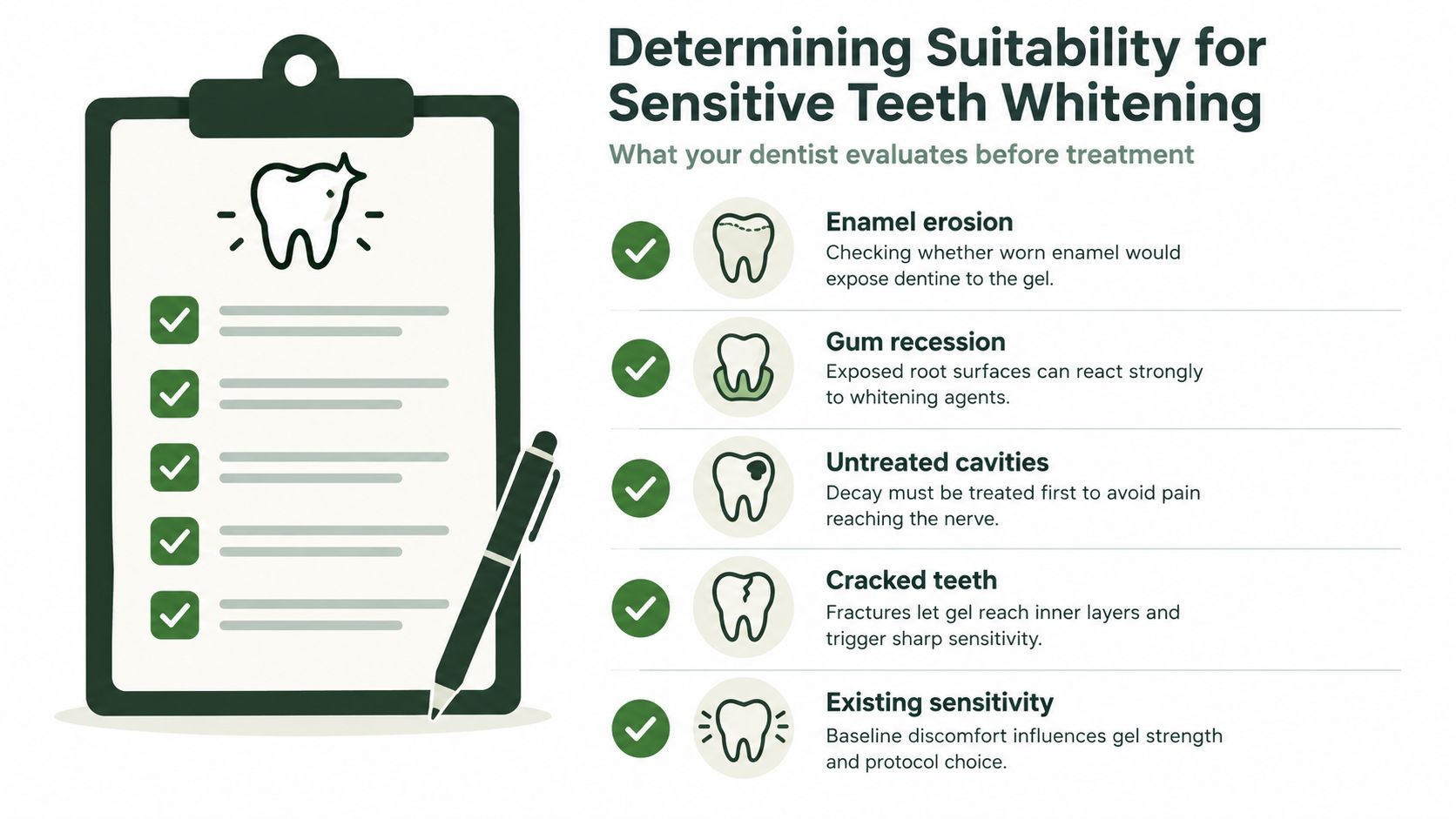
The dentist may inspect the enamel for thinning, erosion or visible wear. Worn enamel offers less protection for dentine, which can make contact with whitening gel more noticeable. Gum recession is another important finding because the exposed root surface doesn't have the same enamel covering as the crown of the tooth.
The examination should also look for:
- Untreated cavities: Decay can allow irritation to travel closer to the nerve, so bleaching may need to wait until the cavity is restored.
- Cracked teeth or restorations: A crack or defective filling can create a pathway for gel and may cause sharp, localised pain.
- Active gum disease: Inflamed or bleeding gums can react poorly to whitening products and may need periodontal care first.
- Existing sensitivity: Your response to cold drinks, brushing or air helps the dentist choose gel strength and application time.
- The source of discolouration: Surface staining may respond differently from colour changes within the tooth, so expectations need to be realistic.
A useful decision rule: If sensitivity is severe, sudden, limited to one tooth or associated with swelling, don't begin bleaching until the underlying cause has been assessed.
Some patients may benefit from fluoride treatment, remineralisation support, a professional cleaning or restorative care before whitening. These steps aren't a delay without purpose. They can protect vulnerable areas and make the eventual whitening plan more predictable. If your teeth and gums are healthy but react easily, the dentist may instead select a lower-intensity or staged protocol.
The final treatment plan depends on your clinical examination, dental history, existing restorations and personal response to sensitivity. A professional teeth cleaning appointment may be appropriate where plaque or surface staining is contributing to the appearance, but cleaning and whitening aren't interchangeable treatments.
Comparing Whitening Options for Sensitive Teeth
Sensitive patients usually need a balance between visible colour improvement and controlled exposure to peroxide. The most suitable method depends on the condition of the teeth, the level of sensitivity and how quickly you want to see a change.
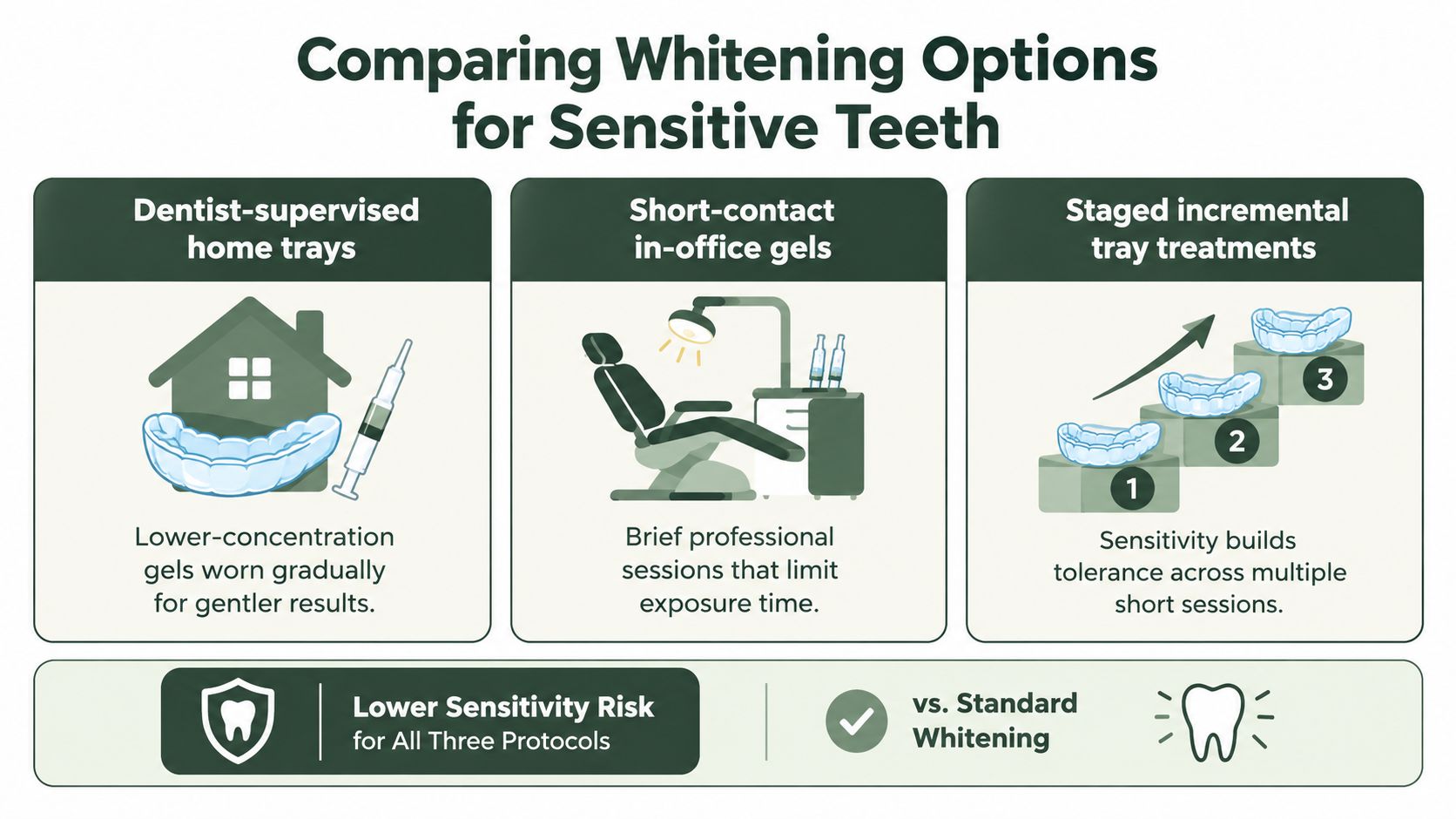
Dentist-supervised home trays
Custom trays allow a dentist to control where the gel sits and how much reaches the gum line. A lower-concentration gel can be used gradually, with the wear time adjusted if you notice discomfort.
Advantages
- Gradual changes can be easier to tolerate.
- The dentist can modify the schedule.
- A well-fitting tray can reduce unnecessary contact with the gums.
Limitations
- Results require patience and consistent use.
- The tray must be used exactly as directed.
- Wearing it for longer than advised can increase irritation.
For patients with baseline sensitivity, this option often offers a gentler pace. The ADA notes that a systematic review found home-based tray whitening generally causes less sensitivity than in-office bleaching, although both carbamide peroxide and hydrogen peroxide can cause mild, temporary tooth or gum irritation (ADA review and whitening guidance).
Short-contact in-office whitening
In-office treatment gives the dental team direct control over isolation, gel placement and application time. A short-contact plan may be considered when the patient wants professional treatment but has concerns about prolonged exposure.
The advantage is close monitoring. If a patient develops discomfort, the dentist can stop, rinse the area and adjust the next application. The limitation is that a stronger or more concentrated gel isn't automatically the safest choice for a sensitive mouth. Faster treatment may create a more noticeable sensitivity response, so the dentist must weigh speed against comfort.
Staged incremental tray treatments
A staged plan divides whitening into shorter sessions rather than aiming for the full change at once. This can be useful when a patient has previously reacted to whitening or has several areas that need careful monitoring.
The process may involve:
- Checking the initial response with a conservative application.
- Allowing the teeth to settle between sessions.
- Increasing or maintaining exposure only if the response remains acceptable.
- Pausing for desensitizing care if sensitivity rises.
This method can make the treatment easier to individualise, but it may require more appointments or a longer overall process. It also won't correct a cavity, cracked tooth, gum disease or a restoration that doesn't match the surrounding teeth. Whitening changes natural tooth colour, not the colour of fillings, crowns or veneers.
The professional teeth whitening in Dubai service page can help patients understand the clinical option, but the fastest available approach isn't necessarily the right one for sensitive teeth. Ask which method will be used, how contact time can be modified and what to do if pain starts.
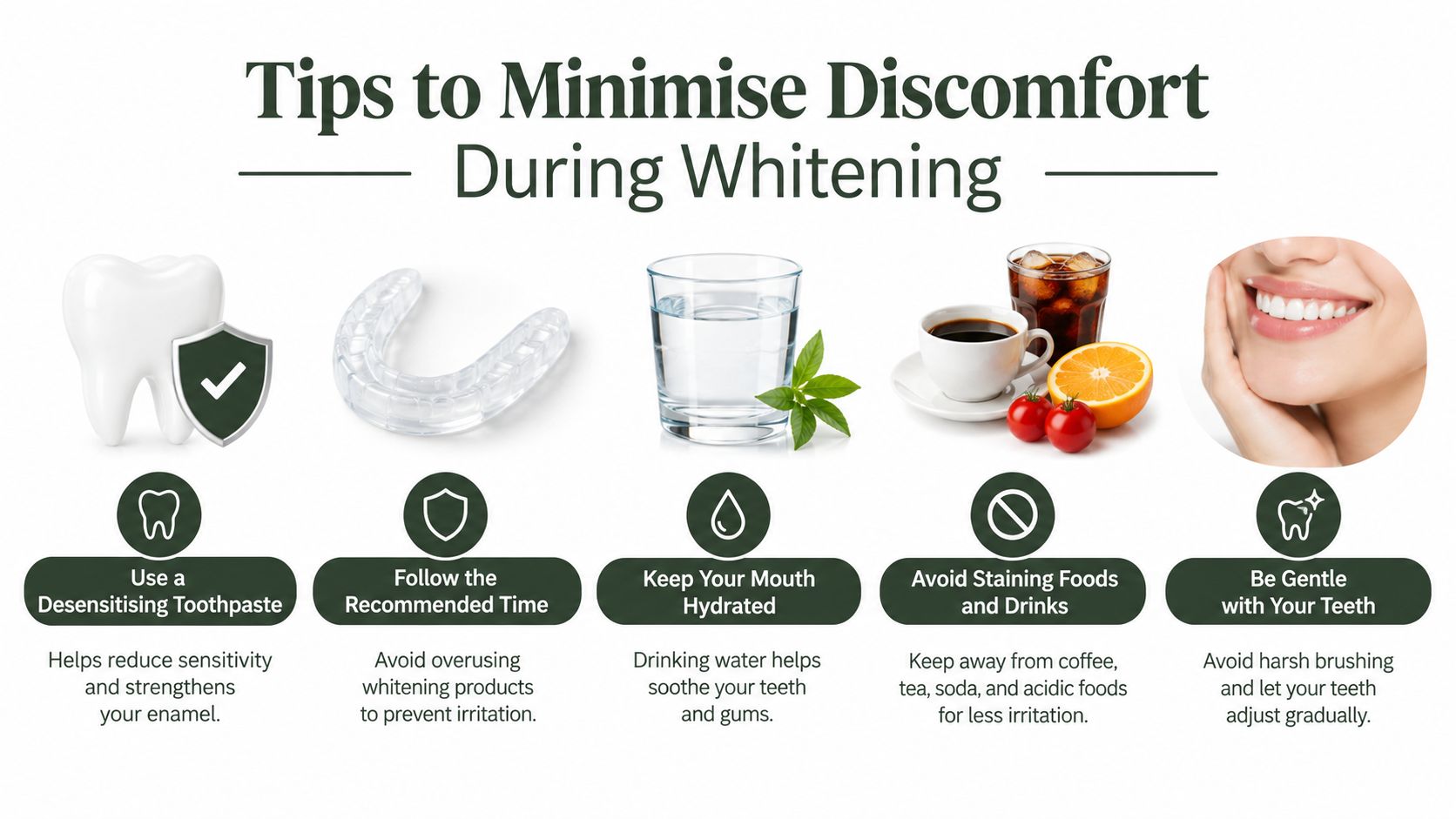
Tips to Minimise Discomfort During Whitening
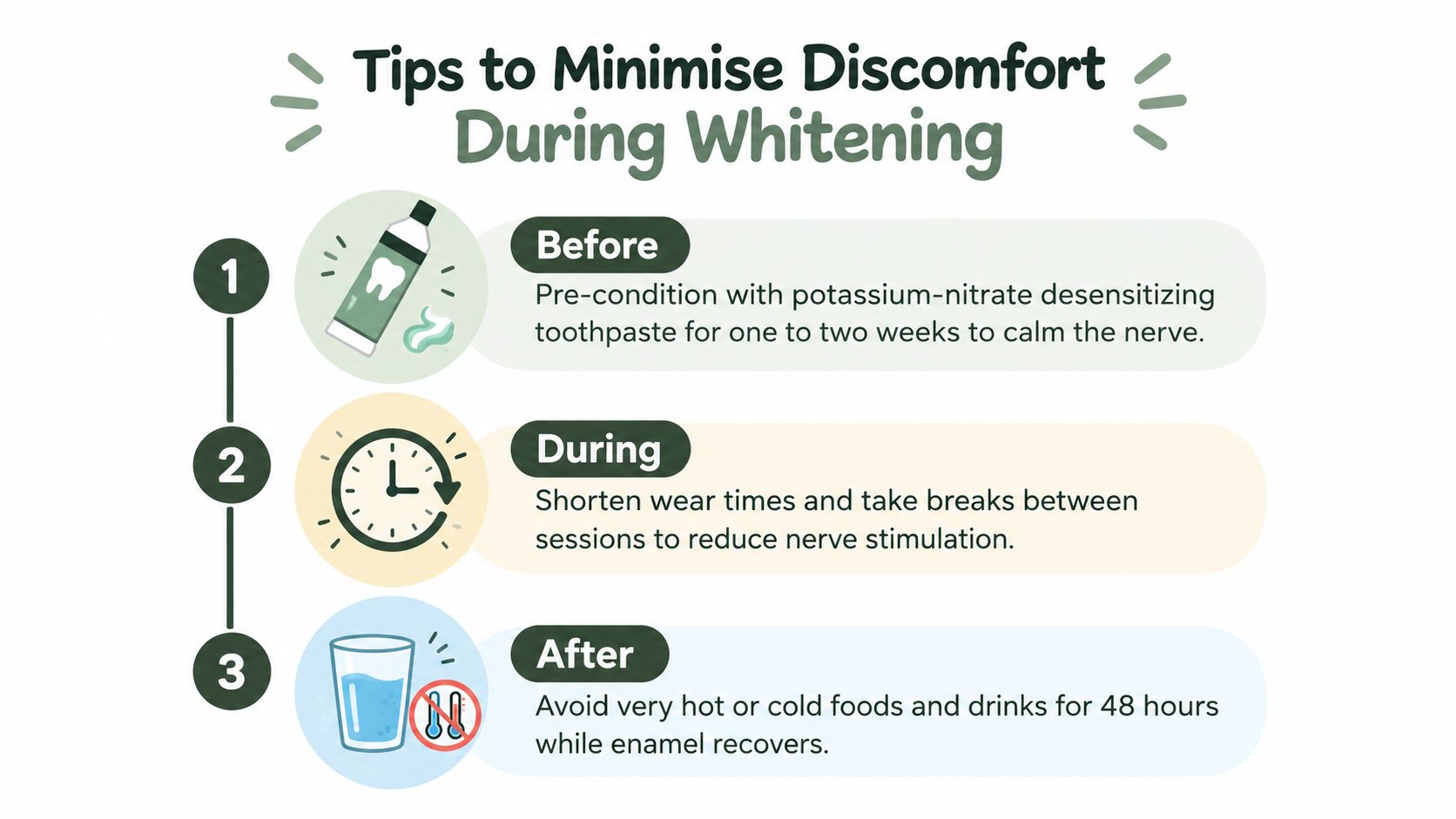
Preparation gives sensitive teeth a better chance of tolerating whitening. A dentist may recommend a potassium-nitrate desensizing toothpaste for 1 to 2 weeks before and after treatment, as described in UAE-based clinical guidance (UAE guidance on managing whitening sensitivity). Potassium nitrate helps reduce the nerve response that makes sensitivity feel sharp, but it won't treat decay, a crack or gum disease.
Before treatment
Use the recommended toothpaste consistently rather than applying it only on the day of whitening. Brush gently with a soft-bristled brush and avoid abrasive scrubbing, particularly around the gum line. If your dentist recommends fluoride treatment or a remineralising product, follow the stated instructions instead of adding several whitening products at once.
A professional cleaning may also be useful when plaque or calculus is hiding the natural tooth colour. Cleaning removes deposits, while whitening addresses the colour of the tooth itself. Your dentist can decide whether cleaning should come first and whether the remaining discolouration is suitable for bleaching.
During treatment
Contact time matters. UAE clinical guidance describes reducing application cycles from 15 minutes to 10 minutes when discomfort occurs. That adjustment should be made by the dentist or according to the professional instructions for your specific product, not guessed by extending or shortening a kit at random.
Spacing sessions can also reduce the total stimulus placed on the nerves. If your teeth become sharply sensitive, stop the home application, remove the tray or strip, rinse as directed and contact the dental team if the sensation doesn't settle.
- Follow the prescribed amount: More gel won't necessarily produce a better result, and excess gel can irritate the gums.
- Keep gel away from the gum line: A properly fitting tray and careful placement help prevent avoidable soft-tissue contact.
- Record your response: Note whether discomfort is general or limited to one tooth, and whether it occurs during or after application.
- Don't mix products: Combining strips, whitening toothpaste and peroxide rinses can make irritation harder to control.
After treatment
Sensitivity commonly settles within 24 to 72 hours according to UAE-based clinical guidance. During recovery, choose foods and drinks that aren't extremely hot or cold. Staying hydrated and rinsing with water after meals can help remove leftover acids and staining substances without aggressive brushing.
A dentist may recommend a fluoride or calcium-containing rinse as part of an individual aftercare plan. These products should support, not replace, brushing, interdental cleaning and treatment of any dental disease. Persistent pain, spontaneous pain or pain that wakes you should be reported rather than managed only with whitening aftercare.
Frequently Asked Questions
Can whitening be combined with a routine cleaning?
Often, a dentist may recommend cleaning before whitening when plaque, calculus or surface staining is present. The correct order depends on your gum health and examination findings. Cleaning won't change the colour of a filling or crown, and whitening may need to be planned around future restorative work.
Does UAE insurance cover teeth whitening?
Insurance policies commonly distinguish between medically necessary dental care and elective cosmetic treatment, but coverage differs between insurers and plans. Ask your insurer and the clinic for confirmation before treatment. Don't assume that a cleaning, sensitivity treatment or restoration has the same coverage as whitening.
What should I do if sensitivity lasts beyond 72 hours?
Contact a dentist if discomfort continues beyond the expected recovery period, becomes stronger or affects one specific tooth. The dentist may need to check for decay, a crack, gum recession, exposed dentine or another cause unrelated to routine whitening sensitivity.
When should I arrange a follow-up?
Arrange a review if you had significant discomfort, needed to pause treatment or aren't sure whether the colour change is even. A follow-up can help determine whether to continue, change the gel or consider an alternative such as stain removal, bonding or restorative treatment.
Conclusion and Next Steps
Teeth whitening for sensitive teeth starts with diagnosis, not with the strongest available gel. A dentist should check enamel, gums, cavities, cracks and existing sensitivity before selecting supervised trays, short-contact in-office whitening or staged treatment. Potassium-nitrate toothpaste, shorter applications, spaced sessions and careful aftercare can help reduce temporary discomfort, but persistent or severe pain needs assessment.
Yoyimé Clinic in Deira, Dubai, can assess your oral health and discuss a whitening plan based on your teeth, gums and treatment goals. A consultation is the safest way to decide whether whitening is appropriate now or whether cleaning, fluoride support, remineralisation or restorative care should come first.
Visit Yoyime Clinic for a dental consultation focused on sensitive teeth and professional whitening options. The team can examine the cause of your sensitivity, explain suitable protocols and prepare an individual treatment plan for your smile.