


You've just put in a new set of trays, and the tightness is already speaking for itself. That first squeeze can be unsettling, especially if you were told aligners are “comfortable” and now your front teeth feel tender when you bite. Clear aligners pain is usually a short, predictable pressure phase, not a sign that something has gone wrong, but the details matter because normal adaptation and a real fit problem can feel similar at first.
For patients in Dubai, the useful question isn't whether aligners hurt in theory. It's what the pressure should feel like, when it should peak, and which symptoms mean you should call your dentist instead of waiting for the next tray change. A good timeline turns discomfort into something you can read, rather than something you fear.
Table of Contents
- What Clear Aligners Pain Actually Feels Like
- The First Seven Days After You Start Treatment
- Why Your Aligners Hurt and Where the Pressure Comes From
- Practical Relief Tips You Can Use at Home
- Pain in the Middle of Treatment and After Refinements
- When Pain Is Not Normal and You Should Call Your Dentist
- Daily Habits That Make Wearing Aligners Easier
- Getting Personalised Guidance at Yoyime Clinic in Deira
What Clear Aligners Pain Actually Feels Like
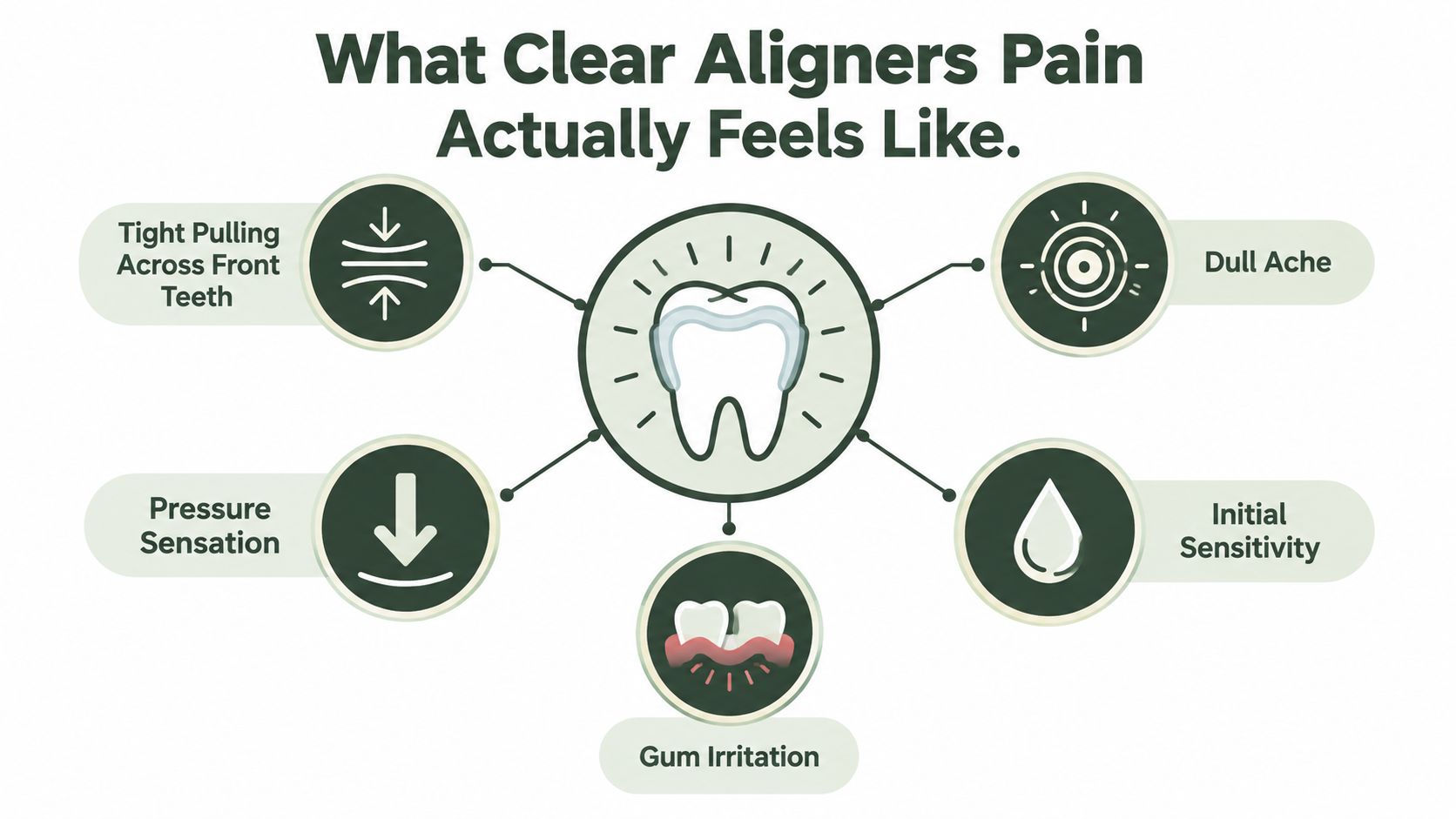
The first feeling is usually a tight pull across the front teeth. Some people notice a dull ache in the jaw, others feel mild tenderness when they bite, and some get small pinches where the tray edge meets the gum. That mix of sensations is common because aligners press on teeth in different ways, depending on which teeth are being moved and how closely the plastic sits.
Pressure, not nerve pain
The important distinction is this, ordinary aligner discomfort is orthodontic pressure. It comes from the tooth moving in its socket and the supporting tissue reacting to that force, not from a damaged nerve. That is why the feeling often gets described as tightness, soreness, or a dull bruise-like ache rather than a sharp electric pain.
A useful rule is that some sensitivity is expected. In fact, many patients find that the first day of a new tray feels the firmest, then settles as the mouth adapts. That doesn't mean every sore moment is normal, though. Sharp, throbbing, or worsening pain is different, and it should not be brushed off as “just aligners”.
What patients often confuse
People often worry when the tray feels uncomfortable in one specific tooth. Sometimes that's just the tooth doing more of the work in that tray. Sometimes it's a clue that the tray edge is rubbing, an attachment is irritating the cheek, or the fit is off.
Practical rule: if the sensation feels like steady pressure and eases over a few days, that usually fits the expected pattern.
The early phase can feel strange, but strange doesn't automatically mean unsafe. Once you know the sensation to expect, the rest of the timeline becomes much easier to judge.
The First Seven Days After You Start Treatment
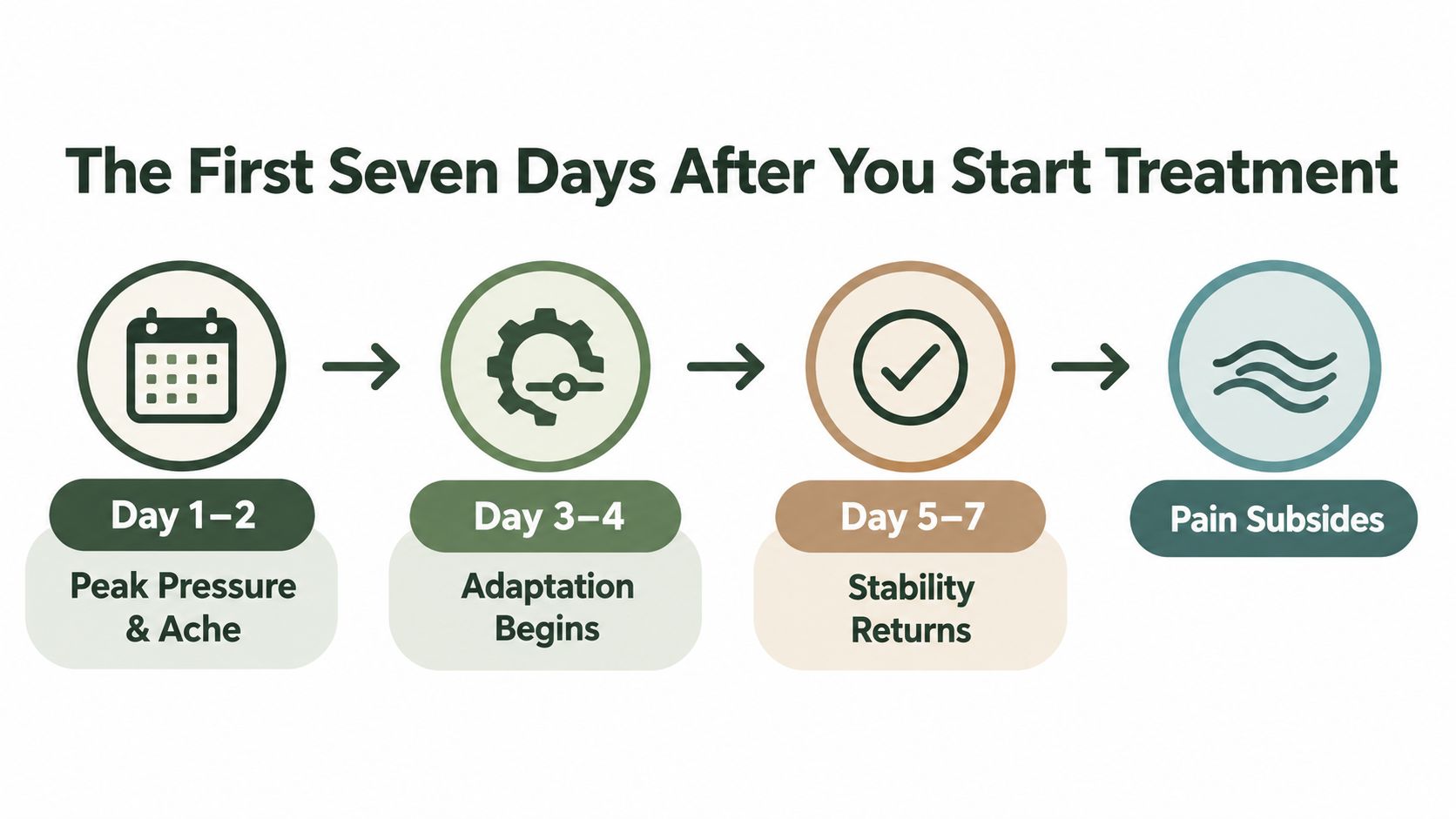
The best evidence points to a simple pattern, pain tends to peak around 24 hours after insertion and then falls away across the first week. A prospective controlled clinical study in Saudi Arabia found lower pain with Invisalign than with passive self-ligating fixed appliances at every measured time point, and the highest pain for both groups came at 24 hours after appliance placement (PMC study). A separate randomized trial also found that discomfort began about 4 hours after placement and peaked at 24 hours in all groups, with the aligner group staying lower than fixed appliances during the first week (randomized trial).
What the first week usually feels like
The first few hours are often just foreign-body awareness. You notice the plastic, your tongue explores every edge, and speech can feel slightly different. By the time the first day settles in, the pressure usually becomes more obvious, especially when you bite into firmer food.
Days one to three are often the most noticeable. That is when chewing may feel tender and removing the trays can remind you that the teeth are under load. By the later part of the week, the pressure usually drops enough that many patients stop thinking about it unless they take the trays out.
The pattern matters because it helps you judge whether a tray is behaving normally. If the soreness follows the familiar rise and fall, that is usually part of treatment. If it keeps building, or if it feels localised in a way that doesn't match the rest of the mouth, that's worth a call.
A simple week one check
- Day 1: the tray feels tight, speech may sound slightly different, and biting can feel tender.
- Day 2 to 3: pressure is often strongest, especially when removing or inserting the trays.
- Day 4 to 5: most patients notice the ache easing and eating feeling more natural again.
- Day 6 to 7: the trays usually feel more settled, and the mouth has adapted to the new shape.
The early discomfort is real, but it's also one of the clearest signs that the aligner is working as planned.
Why Your Aligners Hurt and Where the Pressure Comes From
Aligners hurt for different reasons, and the location of the pain often tells the dentist what's going on. Controlled tooth movement is the main reason. The tray applies steady force, the periodontal ligament reacts, and that early inflammatory response creates the familiar ache. That's the “good pain” people talk about, although I prefer to call it expected pressure.
The main sources of soreness
Composite attachments can create focal sore spots because they make the tray grip more firmly. They help rotate or move teeth, but the trade-off is that the tray may feel tighter over those teeth and rub the tongue, lips, or cheeks for a few days. Tray edges can also irritate the gum if they're slightly overextended or if the mouth is dry.
Patient habits matter too. Skipped wear time can make the next insertion feel harsher because the teeth have drifted away from the tray shape. A dry mouth can make plastic feel harsher against soft tissue. Previous dental work can change how a tooth responds to pressure, especially if a tooth already had sensitivity before treatment.
| Source | What It Feels Like | Typical Duration |
|---|---|---|
| Tray pressure | Tight, even pressure across several teeth | Usually strongest early in the tray cycle |
| Attachments | Localised rubbing or tenderness on lips, cheeks, or tongue | Often settles after the first few days |
| Tray edges | Gum irritation or a sharp rub in one spot | Persists until the edge is adjusted or the tissue adapts |
| Skipped wear time | Tray feels suddenly too tight on reinsertion | Returns whenever wear time drops |
| Dry mouth | Plastic feels harsher, mouth feels more tender | Better with hydration and consistent wear |
Pain location is useful because it helps separate expected movement pressure from a tray fit issue. If the tenderness moves with the tray change and fades, that's usually normal. If one spot stays sharp, that's a different conversation.
Clinical cue: localised pain is more informative than general soreness, because it often points to a specific edge, attachment, or tooth that needs review.
Read more about Invisalign treatment planning and discreet tooth movement.
Practical Relief Tips You Can Use at Home
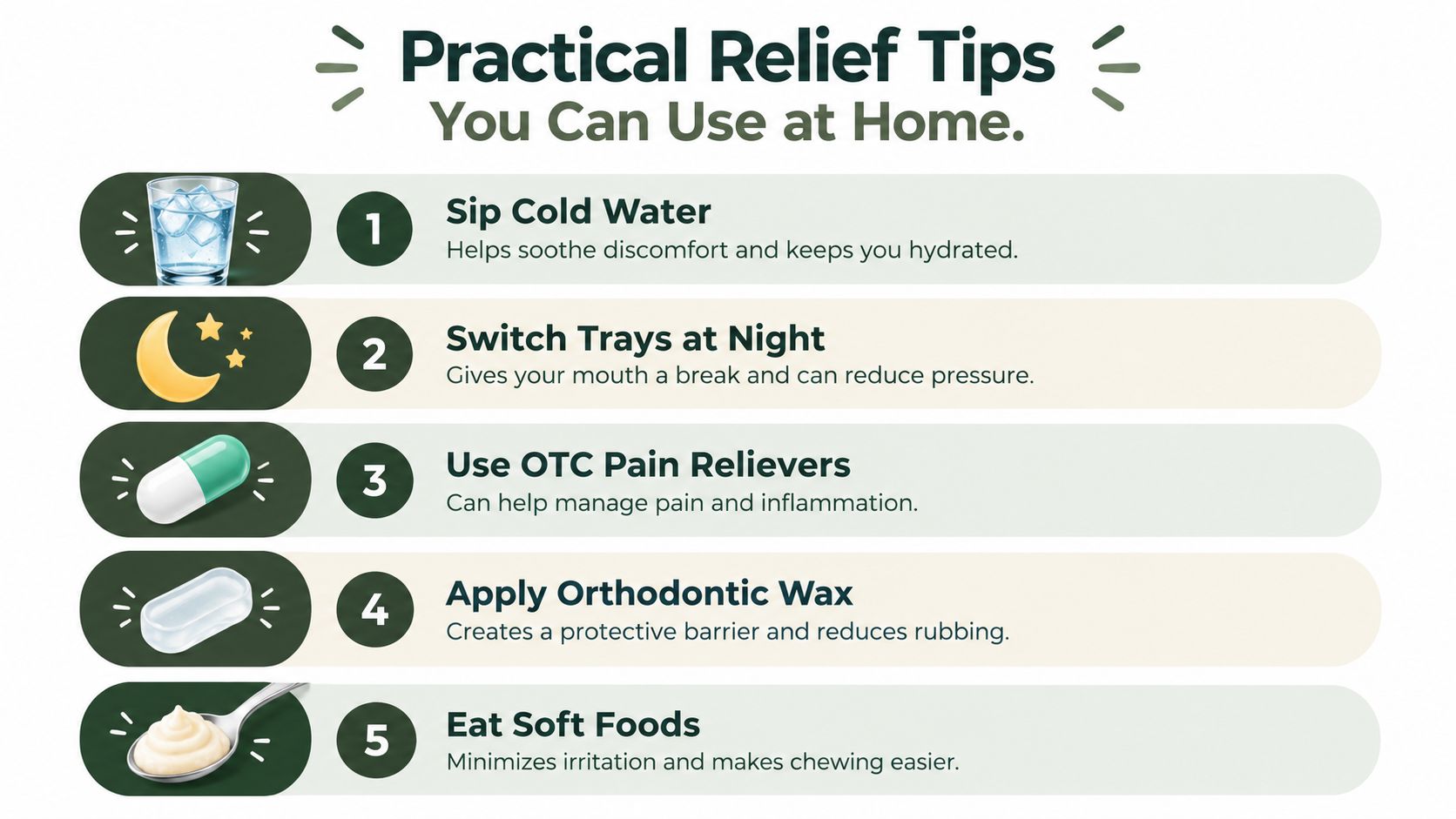
Relief works best when it supports wear time instead of interrupting it. Aligners only do their job when they stay in for most of the day, so the goal is to calm the mouth enough that you can keep them seated and moving the teeth as planned. The simplest fixes are often the most useful.
Start with low-effort comfort measures
Sip cold water when the teeth feel tender. A cool drink can settle the feeling of pressure and makes the mouth less dry, which helps the plastic feel less abrasive. This is especially useful in the first 24 hours after a new tray.
Switch trays at night if your dentist has approved that routine. The first pressure wave then happens while you're asleep, which usually makes the change easier to tolerate. That doesn't remove the discomfort, but it often makes the early hours feel less intense.
Use orthodontic wax on a rough edge if a specific spot is rubbing the cheek or gum. Wax doesn't change the tray shape, but it gives the tissue a temporary barrier while the area settles. If the edge keeps cutting, bring the tray in for review instead of trimming it yourself.
Add active measures when soreness is stronger
Chewing on aligner chewies can help seat the tray more evenly. A tray that's fully seated tends to distribute pressure more predictably, which often feels better than a tray floating slightly above the teeth. Use them gently, not aggressively.
Warm saltwater rinses can soothe tender gums and wash away debris that might be irritating the tissue. They're especially useful if the gums feel puffy or if the edges are rubbing a little more than usual.
Over-the-counter pain relief can help during the first 24 hours after a tray change, if your dentist or pharmacist says it's safe for you. Many patients only need it briefly, then stop once the peak has passed. The key is timing, not overuse.
Soft foods help too. Yogurt, soup, eggs, and rice are easier to manage when biting feels tender. The aim is to keep you comfortable enough to wear the trays for the full schedule, not to rely on removing them for relief.
Pain in the Middle of Treatment and After Refinements
Mid-treatment soreness is usually milder because the teeth are no longer making their first big moves. Each new tray still applies force, but the changes tend to be smaller and more targeted, so the pressure spike is often easier to recognise and easier to manage. That is one reason social-media claims that aligners are “virtually painless” can be misleading.
Why the feeling changes later on
As treatment progresses, the mouth adapts to the routine. The tissues become less reactive, and you also get better at putting trays in, taking them out, and recognising the difference between normal tightness and something unusual. So the experience can still be noticeable, but it's usually more predictable.
Refinements are a separate event. A new scan, a fresh set of trays, and a return to the first-week pattern can bring back sharper sensations in teeth that were already moved once. That doesn't mean treatment has failed. It means the dentist is fine-tuning the result.
The important clue is whether the discomfort is intermittent and tied to tray changes or steady and escalating. The first is expected. The second deserves attention, especially if the tray no longer seats the way it should.
Common pattern: small waves of tightness every time you change trays are normal, but pressure that keeps increasing through the week is not.
Patients in Dubai often notice this most after a busy few days, when wear time slips, the mouth runs dry, or tray changes happen late at night. That is usually when normal soreness feels stronger than expected. The fix is often simple, but the pattern should still be checked if it doesn't settle.
When Pain Is Not Normal and You Should Call Your Dentist
A good rule is that ordinary aligner discomfort is dull, fairly even, and improves after a few days. Anything that doesn't fit that shape should be checked. The emergency dental pain guidance at Yoyime Clinic is available here for urgent situations, including emergency dental pain management.
Red flags to take seriously
- Sharp or shooting pain in one tooth that doesn't ease after the first few days.
- Bleeding or swollen gums that stay inflamed instead of settling.
- A broken or loose attachment that changes how the tray fits.
- A tray that no longer seats fully even after proper wear and seating.
- Persistent throbbing that interrupts sleep, which is not typical aligner soreness.
- Ulceration or a cut from a sharp edge that keeps getting worse.
Those signs can point to a fit problem, a tooth that needs assessment, or tissue damage from a rough edge. They're not things to ignore or “see how it goes” on.
Pain that spreads into the face, jaw, or ear can also signal that the bite isn't settling well, or that another dental issue is being uncovered during treatment. That's especially important if the discomfort started suddenly rather than gradually.
If something feels off, the safest move is simple, call the clinic. It's better to check a tray early than to keep wearing something that's irritating tissue or forcing a tooth the wrong way.
Daily Habits That Make Wearing Aligners Easier
The small habits matter more than many would expect. Clear trays are easy to live with when you build a routine around removal, storage, hydration, and timing. They become much harder when each meal turns into a guess.
Use a simple removal and storage routine
Take the trays out with both hands, starting from the back molars and easing the tray forward. That keeps you from twisting the plastic and reduces the risk of cracking it. Once they're out, store them in the case, not wrapped in a napkin where they can be lost or thrown away.
Drink water regularly through the day. A dry mouth makes the plastic feel harsher and can make the soft tissues more tender. If you know you have a long meeting, a wedding, or an Iftar gathering in Dubai, plan your meal window so the trays are out briefly and back in without delay.
Make the first day of a new tray easier
Switching to a new tray at bedtime is often the easiest way to handle the first pressure wave. You sleep through the most noticeable part of the adjustment, then wake up already part-way through the adaptation. That's useful whether you're at work in Deira, travelling across Dubai, or heading out of the city for the weekend.
For travel, keep two spare sets in your carry-on and set a phone reminder for the wear target your dentist gave you. Luggage gets delayed, meals run long, and routines slip faster than most expect. A reminder is a small thing, but it keeps the treatment on track.
If you need to speak in public, a slight lisp in the first days is common. It usually settles quickly as your tongue learns the new shape. Don't panic if your speech sounds different for a short while, it usually normalises with continued wear.
Getting Personalised Guidance at Yoyime Clinic in Deira
Aligner discomfort is a clinical issue, not just a comfort issue, because the right tray needs the right fit, the right attachments, and the right oral health background. Suitability depends on bone level, gum health, bite complexity, and how well the teeth are expected to track. That's why an in-person examination matters before anyone decides whether clear aligners are appropriate.
Yoyime Clinic in Ground Floor, Exit 1, Salah Al Din Metro Station, Deira, Dubai offers orthodontic care, including clear aligners, alongside broader dental services. For patients in Dubai and nearby Sharjah, a face-to-face review is the safest way to discuss tray fit, pain patterns, timing, and whether a movement plan needs adjustment. You can use the clinic's contact page here: contact Yoyime Clinic.
Bring your questions about duration, refinements, wear time, and what counts as normal soreness. If you've had pain that feels sharper than expected, or a tray that doesn't seat well, that information helps the dentist judge whether the issue is adaptation or a fit problem. That's the kind of detail a proper consultation is for.
If you're starting aligners or you're already wearing them and the soreness doesn't feel quite right, book a dental assessment at Yoyime Clinic. The team can check your tray fit, review whether the discomfort matches the expected timeline, and guide you on the next step so you're not guessing at home.